Are you wondering what renovations you can complete with $100,000 in Toronto? It is a substantial budget, but the amount of work it covers depends on your home, project scope and finish selections.
In many Toronto homes, $100,000 is best used for one complete, high-impact renovation or a coordinated group of smaller projects. It may cover a kitchen, several bathrooms, a basement renovation or a main-floor refresh, but it will not normally fund a large custom whole-home transformation.
This guide explains the most realistic ways to use a $100,000 renovation budget, what can cause the scope to shrink and how to protect the money reserved for your priorities.
Quick answer
A $100,000 Toronto renovation budget can often fund a substantial kitchen renovation, a basement with selected upgrades, two or more bathrooms, a condo interior renovation or a main-floor surface refresh. Major additions, extensive structural changes and full luxury whole-home renovations generally require a larger budget.
Six realistic ways to use $100,000
01. Complete a substantial kitchen renovation
02. Renovate a main floor without a major addition
03. Update a primary bathroom and additional bathrooms
04. Finish or remodel a basement
05. Renovate the interior of a condo
06. Refresh surfaces throughout a smaller home
How Far Does $100,000 Go in Toronto?
Current Toronto renovation prices vary widely. HomeStars reports that Toronto projects can range from approximately $120 to $550 per square foot depending on the scope, property type and finish level.
This does not mean every renovation should be estimated by multiplying the floor area by one fixed number. Kitchens, bathrooms and older homes can cost more per square foot because they require cabinetry, plumbing, electrical work and detailed finishing.
Review the current Toronto renovation cost guide from HomeStars for additional market context. Your actual estimate should be prepared from drawings, material selections and an inspection of the existing home.
Focus creates a stronger result
Spreading $100,000 across every room can result in incomplete or basic improvements. Concentrating the budget on one important area usually provides better function, stronger visual continuity and fewer unfinished details.
Option 1: A Substantial Kitchen Renovation
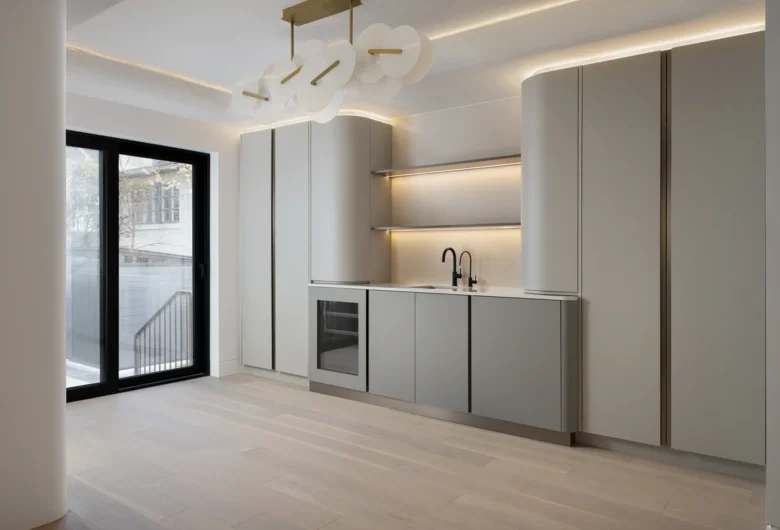
A kitchen is one of the most practical places to direct a $100,000 renovation budget. Depending on the room size and appliance choices, the budget may cover a complete renovation with new cabinetry, counters, lighting, flooring and professional installation.
The project becomes more expensive when you remove structural walls, relocate the sink or range, add premium appliances or extend new flooring into adjoining rooms.
A $100,000 kitchen-focused project may include
- ✓ New semi-custom or selected custom cabinetry
- ✓ Quartz, granite or comparable stone countertops
- ✓ A complete appliance package
- ✓ New sink, faucet, backsplash and hardware
- ✓ Updated plumbing, electrical and ventilation
- ✓ Layered ceiling, pendant and task lighting
- ✓ Flooring, drywall repairs, painting and trim
- ✓ Design, project coordination and contingency
A high-end appliance package or extensive custom millwork may use a large part of the available budget. In that case, you may need to retain the existing layout or simplify other finishes.
Review Odima’s guide to kitchen renovation costs in Toronto for a closer look at the main kitchen expenses.

Option 2: A Main-Floor Renovation
A $100,000 budget may also support a coordinated main-floor renovation when the project avoids a major addition or complete structural rebuild.
This approach works well when the layout is generally functional but the flooring, lighting, finishes and storage no longer suit the household.
Flooring and Stairs
Replace or refinish flooring, update baseboards and complete selected stair or railing improvements.
Lighting and Electrical Details
Improve general lighting, add selected feature fixtures and update switches or controls where the electrical system allows.
Millwork and Storage
Add built-in storage, a media wall, fireplace surround or selected architectural trim rather than custom millwork in every room.
Painting and Interior Finishes
Repair walls, update paint, doors, hardware and trim to create a consistent appearance across the floor.
Limited Kitchen or Powder-Room Work
Include a modest kitchen refresh or powder-room renovation if the larger main-floor scope remains controlled.
Removing several walls, replacing the complete kitchen and rebuilding a staircase within the same budget may require compromises. Structural work should be priced before decorative materials are approved.
Option 3: Multiple Bathroom Renovations
You may be able to renovate a primary bathroom and one or more smaller bathrooms with a $100,000 budget. The number of rooms depends on their sizes, plumbing locations and finish selections.
Keeping fixtures near their existing locations can help control the cost. Large-format stone, custom vanities, heated surfaces and complex shower systems will use more of the available budget.
A bathroom-focused renovation may include
- A complete primary ensuite renovation
- A family or guest bathroom renovation
- A powder-room update
- New tile, vanities, counters and plumbing fixtures
- Shower glass, mirrors, lighting and ventilation
- Waterproofing, repairs, finishing and contingency
Do not reduce the waterproofing scope to protect decorative upgrades
Waterproofing, ventilation and proper installation are more important than premium tile or fixtures. Resolve the technical work first, then use the remaining budget for visible finishes.
Option 4: A Basement Renovation
A $100,000 budget may fund a comfortable finished basement, especially when the foundation is dry, the ceiling height is suitable and major structural work is not required.
The scope may include a recreation room, home office, bathroom, storage and selected built-ins. A legal secondary suite involves additional zoning, fire-separation, egress and building-code considerations that can increase the cost.
Review these conditions before budgeting the basement
- Moisture, drainage and foundation condition
- Existing ceiling height and ductwork
- Electrical-panel capacity
- Location of plumbing and drains
- Insulation and fire-separation requirements
- Window size and emergency egress
- Permit, zoning and intended-use requirements
Underpinning, extensive waterproofing, a separate entrance or a full legal suite can move the project beyond the initial budget. These conditions should be assessed before finalizing the layout.
Option 5: A Toronto Condo Renovation
A $100,000 budget can provide a substantial interior renovation in a smaller condo. It may cover the kitchen, one or two bathrooms, flooring, lighting, paint and selected storage improvements.
Condo renovations have different constraints from detached homes. Building rules may limit work hours, plumbing changes, deliveries, noise and the types of flooring you can install.
Include condo-related costs and requirements
- Management and board approval
- Contractor insurance documents
- Elevator reservations and delivery windows
- Hallway and elevator protection
- Waste-removal procedures
- Flooring and sound-control requirements
Obtain written approval before ordering materials or beginning demolition. A design that conflicts with the building’s rules may need to be changed even when it meets your preferred budget.

Option 6: A Whole-Home Surface Refresh
A smaller home may benefit from a surface-focused renovation across several rooms. This approach can create a more consistent interior without changing the complete layout or rebuilding every room.
The budget may cover flooring, paint, trim, doors, lighting, hardware and selected millwork. Kitchens and bathrooms would usually receive limited updates rather than complete replacements.
Good Candidate
A home with a practical layout, sound building systems and dated finishes that no longer feel coordinated.
Poor Candidate
A home with failing plumbing, outdated wiring, water damage or rooms that require structural reconfiguration.
Best Planning Approach
Choose a consistent material and colour direction, then repeat it through flooring, paint, lighting and hardware.
What $100,000 Usually Will Not Cover
A clear list of exclusions is just as important as your wish list. The following projects commonly require more than $100,000 in Toronto.
- A full high-end gut renovation of a large detached home
- A complete custom kitchen plus several luxury bathrooms
- A major rear, side or second-storey addition
- Extensive underpinning and a fully appointed basement suite
- Whole-home mechanical, electrical and plumbing replacement combined with premium finishes
- Major structural reconfiguration across several floors
- Extensive heritage restoration or custom architectural reconstruction
For wider whole-house pricing context, read Odima’s guide to the cost of renovating a house in Toronto.
Example $100,000 Renovation Budgets
The following examples show how a $100,000 planning budget could be organized. They are illustrations rather than quotes for a specific property.
Scenario one
Kitchen-Focused Renovation
Kitchen construction and finishes$65,000
Appliances$15,000
Design and permit preparation$5,000
Contingency$15,000
Scenario two
Main-Floor Surface Renovation
Flooring and stairs$28,000
Millwork and storage$20,000
Lighting and electrical updates$12,000
Painting, trim and doors$20,000
Planning and contingency$20,000
Scenario three
Bathroom-Focused Renovation
Primary bathroom$45,000
Family bathroom$27,000
Powder-room update$10,000
Planning and contingency$18,000
The budget distribution will change once actual products and existing conditions are known. HST, design services, permits and temporary accommodation may also need to be included.
What Can Reduce the Renovation Scope?
Several conditions can use money that you originally planned to spend on visible finishes. Identifying them before construction will make the budget more reliable.
Structural Changes
Wall removal, new openings and structural beams may require engineering, permits and repairs to adjoining finishes.
Outdated Building Systems
Older wiring, plumbing, heating or ventilation may need to be upgraded before new finishes are installed.
Water or Moisture Damage
Leaks, mould, damaged framing and weak subflooring should be corrected rather than concealed behind new materials.
Premium Material Selections
Custom stone, detailed millwork, specialty hardware and imported fixtures can reduce the amount of space you can renovate.
Occupied-Home Logistics
Dust control, protection, daily cleanup and limited access can add time and labour to the project.
Changes During Construction
Late design changes may require new materials, revised drawings, additional labour and schedule extensions.
How to Plan a $100,000 Renovation Budget
Choose the Main Priority
Decide which room or daily problem should receive the greatest share of the investment.
Inspect the Existing Conditions
Review the structure, plumbing, wiring, moisture and mechanical systems before setting the finish budget.
Define What Is Included
List demolition, design, materials, labour, permits, disposal, tax and final finishing in the proposed scope.
Select the Main Products
Choose or shortlist cabinetry, appliances, flooring, tile and fixtures before relying on an estimated allowance.
Reserve a Contingency
A planning allowance of approximately 10% to 15% can help cover concealed conditions and approved changes.
Compare Complete Proposals
Review the inclusions, exclusions and allowances rather than choosing an estimate only because it has the lowest total.
Document Every Change
Confirm the price and schedule effect of each change before additional work or ordering begins.
Permits and Professional Requirements
The amount you plan to spend does not determine whether a permit is required. The type of work matters.
Structural alterations, new openings and certain plumbing or building-system changes may require permits and supporting drawings. Cosmetic work can have different requirements.
Review the City of Toronto’s current building permit guidance before construction begins.
Electrical work must be completed legally
In Ontario, someone you hire to complete electrical work must be a Licensed Electrical Contractor. Review the Electrical Safety Authority guidance for information about notifications and inspections.
Tarion coverage generally relates to qualifying new homes rather than ordinary renovation work on an existing house. For a renovation, review the contractor’s written warranty, insurance, references, contract and trade qualifications directly.
Should You Renovate in Phases?
Phasing can be useful when the full plan exceeds $100,000. However, each phase should be designed with the future work in mind.
For example, complete hidden electrical or plumbing work before installing new flooring and millwork. Otherwise, future construction may damage materials you recently paid to install.
A practical phased approach
Phase one: Structure, building systems and urgent repairs
Phase two: Kitchen, bathrooms or another high-priority room
Phase three: Flooring, millwork, lighting and connecting finishes
Phase four: Optional upgrades and decorative details
Odima’s complete home renovation guide explains how design, approvals, selections and construction fit together.
Questions to Ask Before Approving the Budget
- What work is included and specifically excluded?
- Does the price include HST?
- Which products are fixed prices and which are allowances?
- Are design, engineering and permits included?
- Does the scope include demolition, disposal and protection?
- Who is responsible for ordering and inspecting materials?
- How will concealed conditions be handled?
- How are changes priced and approved?
- What warranty applies to the completed work?
View Odima’s completed project portfolio for examples of kitchens, interiors and custom renovation details.
Frequently Asked Questions
What can you renovate for $100,000 in Toronto?
A $100,000 budget may cover a substantial kitchen renovation, several bathrooms, a basement remodel, a condo renovation or a coordinated main-floor refresh. The exact scope depends on the property, materials and amount of structural or building-system work.
Is $100,000 enough for a full home renovation in Toronto?
It may fund a surface-focused renovation in a smaller home, but it is not normally enough for a full high-end gut renovation of a large Toronto house. Whole-home structural, mechanical and custom-finish work generally requires a larger budget.
Can $100,000 cover a complete kitchen renovation?
Yes, a substantial kitchen renovation may fit within $100,000. Premium appliances, custom millwork, structural wall removal and major service relocation can use most or all of the budget.
How much contingency should I keep?
A planning allowance of approximately 10% to 15% is often considered. Older homes, structural work and extensive plumbing or electrical changes may require a larger allowance.
Does the $100,000 budget include HST?
Not always. Confirm whether HST is included in every proposal. You should also check whether design, permits, appliances, deliveries, disposal and final cleaning are part of the stated price.
Do I need a building permit for a $100,000 renovation?
The budget does not determine whether a permit is required. Structural alterations, new openings and certain plumbing or regulated building changes may need permits. Confirm the proposed scope with the City of Toronto.
Is it better to renovate one room or several rooms?
Concentrating the budget on one important room often produces a more complete result. Renovating several rooms can work when the projects are mainly surface updates and do not involve major structural or mechanical changes.
Can I renovate my home in phases?
Yes. Create the complete design first so new plumbing, electrical work, flooring and millwork do not need to be removed during a later phase.
Planning a $100,000 Toronto renovation?
Odima Construction can help you assess the existing home, set priorities and develop a renovation scope that works with your available budget.