Are you planning a home renovation in Toronto but unsure how much money to set aside? A reliable renovation budget needs to cover more than visible materials and contractor labour.
Design work, permits, demolition, building-system upgrades, deliveries, taxes and unexpected repairs can all affect the final amount. Planning for these costs before construction can help you make decisions without repeatedly increasing your budget.
This guide explains how to budget for a Toronto home renovation, organize expenses, compare estimates and protect your project from common financial surprises.
Quick answer
Start with the maximum amount you can comfortably spend. Set aside approximately 10% to 15% for contingency, define your must-haves and request estimates based on the same written scope. Include design, permits, tax, temporary living costs and final finishing rather than budgeting only for construction.
A complete renovation budget should include
01. Design, drawings and professional services
02. Permits, approvals and inspections
03. Demolition, protection and disposal
04. Labour, trades and project coordination
05. Materials, fixtures and appliances
06. Deliveries, storage, taxes and temporary expenses
07. Contingency for unknown conditions and approved changes
1. Set Your Maximum Renovation Budget
One of the first things you should think about is the maximum amount you can spend without affecting your emergency savings or other financial responsibilities.
This number should not automatically become the construction budget. You still need room for contingency, taxes, design services and expenses that may fall outside the contractor’s proposal.
Separate your budget into three numbers
Preferred budget
The amount you would like the complete project to cost.
Approved project budget
The amount allocated after the scope, products and estimates have been reviewed.
Absolute financial limit
The amount you will not exceed, including contingency and all additional expenses.
Keeping these numbers separate helps prevent optional upgrades from consuming money reserved for necessary work.
2. Define Your Renovation Priorities
A wish list can become expensive when every item is treated as essential. Before developing the design, identify the problems the renovation must solve.
Your priorities may include improving storage, creating another bathroom, repairing damaged building systems or making the home easier for your family to use.
Must-Haves
Work required for safety, function, code compliance or the main purpose of the renovation.
Preferred Improvements
Features that provide meaningful comfort or convenience but can be adjusted if the project exceeds the target budget.
Optional Upgrades
Decorative or specialty features that can be removed, simplified or completed during a later phase.
Ask What Problem Each Expense Solves
A larger island may look appealing, but it may not improve a kitchen with narrow walkways. Custom built-ins may add storage, while decorative wall panelling may mainly affect appearance.
Connecting each expense to a practical goal will help you determine which features deserve the greatest share of your budget.
3. Understand Toronto Renovation Cost Ranges
Toronto renovation costs vary according to the property, finish level and amount of structural or building-system work involved.
Current Toronto market guidance places many renovation projects within a broad range of approximately $120 to $550 per square foot. A controlled cosmetic renovation may remain near the lower end, while custom full-gut projects can reach the higher end.
Review the current Toronto renovation cost guide from HomeStars for additional market context.
Do not build your final budget from square footage alone
A smaller home with two bathrooms, custom cabinetry and structural work may cost more than a larger home receiving flooring, paint and simple fixture replacements.
Odima’s guide to the cost of renovating a house in Toronto provides a closer look at whole-home pricing and the factors that affect it.
You can also review the most expensive parts of a Toronto home renovation before assigning money to individual rooms.
4. Build the Budget Around the Complete Scope
A renovation estimate becomes more reliable when the contractor knows exactly what is being removed, retained, repaired and installed.
Broad requests such as “renovate the main floor” can produce very different estimates. One contractor may include new flooring and painting, while another assumes structural changes, electrical work and custom millwork.
Define these items before requesting detailed estimates
- Rooms and areas included in the project
- Walls, doors and openings being changed
- Existing finishes and fixtures being retained
- Plumbing, electrical and HVAC changes
- Cabinetry, appliances and major fixtures
- Flooring, tile, paint and trim expectations
- Permit, engineering and inspection requirements
- Protection, disposal, cleaning and project completion
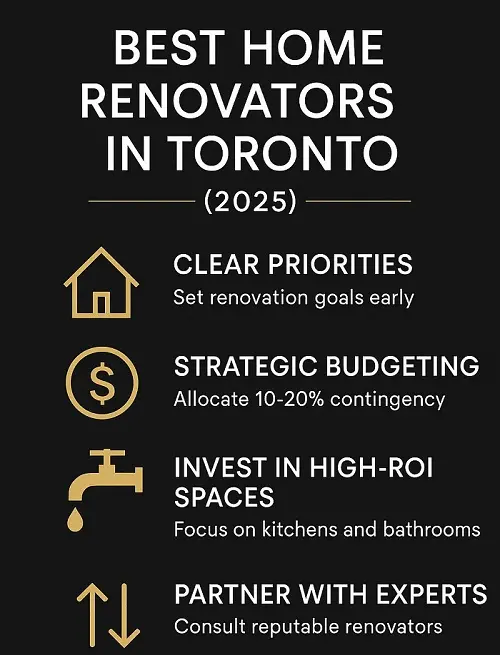
5. Organize Your Renovation Budget by Category
Dividing the budget into categories makes it easier to see where the money is going and which areas can be adjusted.
Planning and Professional Services
Architectural design, interior design, measurements, drawings, engineering, surveys and professional consultations.
Approvals and Permits
Building permits, applications, zoning reviews, condo approvals and required inspection-related costs.
Construction and Skilled Trades
Demolition, framing, carpentry, plumbing, electrical work, HVAC, drywall, tile, flooring, painting and installation.
Materials and Fixtures
Cabinetry, countertops, flooring, tile, plumbing fixtures, lighting, hardware, doors and trim.
Appliances and Specialty Equipment
Kitchen appliances, fireplaces, smart-home systems, audio equipment and specialty mechanical products.
Additional Project Expenses
Deliveries, storage, disposal, temporary accommodation, furniture moving, cleaning and applicable taxes.
6. Include a Renovation Contingency
A contingency is money reserved for concealed conditions, necessary repairs and approved changes that could not be accurately priced before construction.
Approximately 10% to 15% may be considered as a starting planning allowance. Older homes, structural renovations and projects involving extensive plumbing or electrical work may require a larger reserve.
A contingency may be needed for
- Water damage behind walls or cabinets
- Outdated or unsafe wiring
- Deteriorated plumbing and drain lines
- Uneven or damaged subflooring
- Hidden framing or foundation damage
- Hazardous materials requiring professional assessment
- Undocumented previous alterations
- Changes approved after construction begins
Do not treat the contingency as an upgrade allowance
Keep the reserve protected until demolition and rough-in work are complete. Spending it early on optional finishes can leave little room for necessary repairs.
7. Understand Fixed Prices and Allowances
A fixed price is based on a clearly defined product or service. An allowance is a temporary amount used when the exact selection or condition is not yet known.
Allowances are useful during early planning, but they can make an estimate appear lower when the amounts do not match the quality you expect.
Fixed Price Example
Supply and install a specific faucet model, including the identified labour and connection work.
Allowance Example
A set amount for a faucet that has not yet been selected. Any difference between the allowance and final choice affects the budget.
Ask what each allowance covers, whether it includes tax and delivery, and what happens when the final selection costs more or less.
8. Compare Renovation Estimates Properly
The lowest estimate may not represent the lowest price for the same work. It may exclude permits, electrical changes, painting, cleanup or final repairs.
Provide each contractor with the same drawings, scope and product information. You can then compare what is included rather than trying to interpret different assumptions.
Review these details in every proposal
- Complete description of the work
- Materials, models and specifications
- Allowances and assumptions
- Work excluded from the price
- Permit and inspection responsibilities
- Payment schedule and project milestones
- Change-order process
- Warranty and deficiency process
- Confirmation of whether HST is included
9. Track Spending Throughout the Renovation
A renovation budget should be updated as selections, contracts and change orders are approved. Do not rely only on the original estimate once construction is underway.
Track these amounts separately
Original budget: The approved amount before construction
Committed cost: Contracts and purchases already approved
Paid to date: Payments that have already been made
Forecast cost: Expected final amount based on current information
Remaining contingency: Unused reserve still available
Review the budget at regular project milestones. A change should be approved in writing before additional labour begins or materials are ordered.
10. Plan for Permits and Professional Services
Structural changes, new additions and certain plumbing or mechanical alterations may require permits, drawings and professional review.
The City of Toronto states that building permits are required for additions and many structural or material alterations, including adding or removing walls and changing certain openings.
Review the City’s current building permit requirements before finalizing your construction budget.
Electrical work must be completed legally
In Ontario, a person or business hired to perform electrical work in your home must be a Licensed Electrical Contractor, subject to limited exemptions. Review the Electrical Safety Authority guidance before hiring someone.
A coordinated design-build process can help connect the scope, drawings, product selections and construction budget before work begins.
11. Consider Financing and Current Incentive Programs
Some homeowners use savings, refinancing, a home equity line of credit or a renovation loan. Each option has different interest costs, fees and repayment risks.
Compare the total borrowing cost rather than focusing only on the monthly payment. A qualified financial professional can help you assess how renovation debt fits within your wider finances.
Home Energy Loan Program
The City of Toronto currently states that eligible homeowners can borrow up to $125,000 through the Home Energy Loan Program for qualifying home energy improvements.
Review the current HELP eligibility and application requirements directly with the City before including the program in your financial plan.
Incentives, loan limits and eligibility requirements can change. Confirm program details before signing contracts or assuming that a particular upgrade will qualify.
12. Decide Whether to Renovate in Phases
Phasing can help when the complete renovation exceeds your current budget. However, the full project should still be planned before the first phase begins.
New flooring, cabinetry or finishes may need to be removed if future structural, plumbing or electrical work was not considered in advance.
A practical renovation sequence
Phase one: Structural work, moisture problems and essential building-system upgrades
Phase two: Kitchens, bathrooms and other high-priority functional spaces
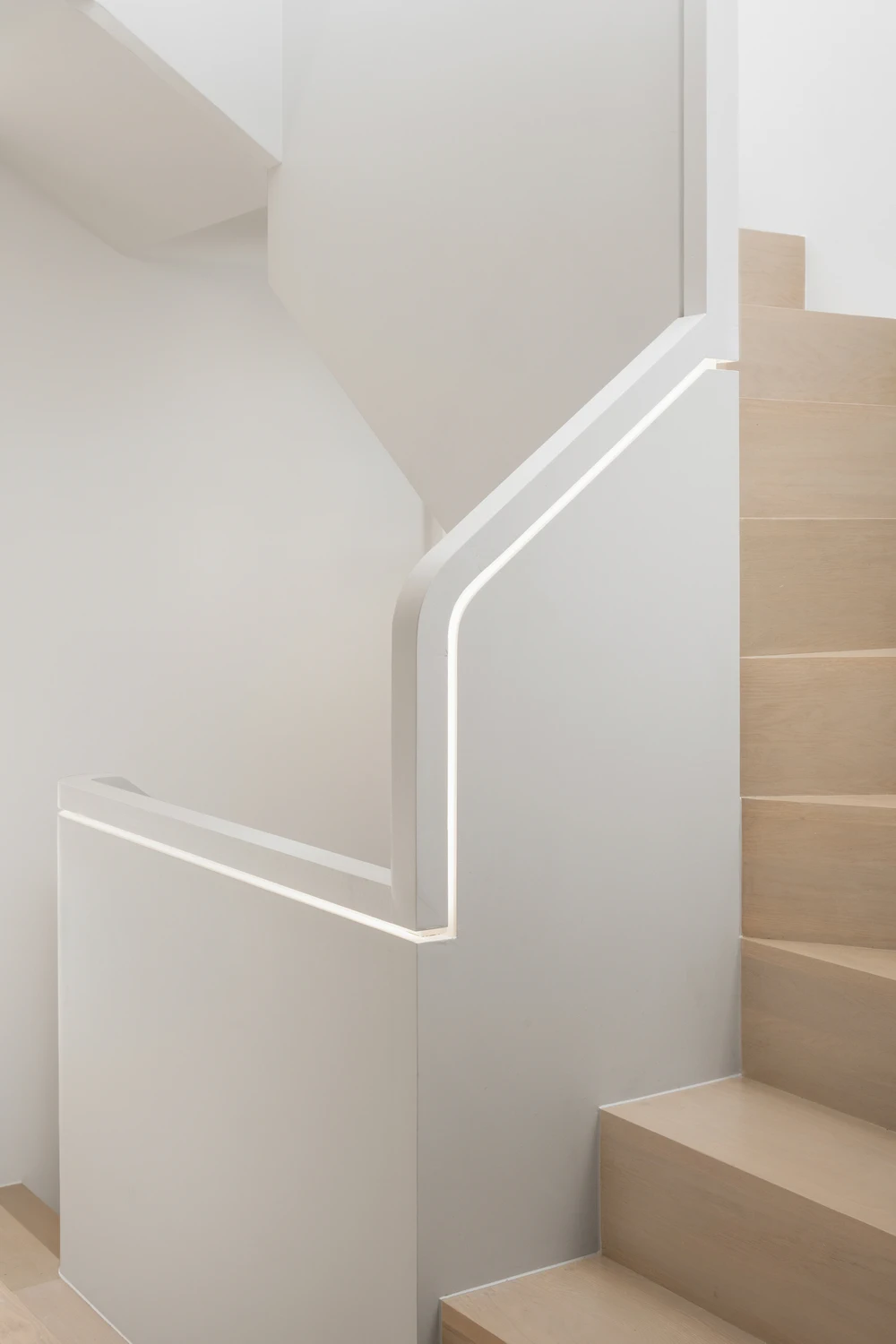
Phase three: Flooring, stairs, doors, trim and connecting finishes
Phase four: Custom millwork, smart-home features and optional decorative upgrades
Odima’s guide to what a $100,000 renovation budget can achieve in Toronto can help you decide whether to focus on one area or divide the work into stages.
Example $250,000 Renovation Budget
The following example shows how a $250,000 planning budget might be divided. It is an illustration rather than a quote for a specific Toronto property.
Construction and skilled trades$100,000
Materials and fixtures$70,000
Appliances and specialty equipment$25,000
Design, engineering and permits$20,000
Contingency reserve$35,000
The distribution will change according to the home and project priorities. A custom kitchen may require more material spending, while an older home may require more money for structural or building-system work.
Common Renovation Budgeting Mistakes
Budgeting only for visible finishes
New cabinets and flooring may be easy to price, but demolition, repairs, permits and mechanical work also need to be included.
Using the entire budget for the original design
A project without contingency leaves little room for concealed damage, code-related work or necessary changes.
Comparing estimates with different scopes
A lower proposal may exclude work that another contractor has included. Review each line rather than comparing only the totals.
Selecting products after construction starts
Late selections can affect the layout, rough-in work, ordering schedule and final price.
Approving verbal changes
Every change should include written confirmation of the new specification, price and schedule effect.
Forgetting temporary expenses
Food, storage, furniture moving, parking, pet care or temporary accommodation can add to the complete project cost.
Questions to Ask Before Approving the Budget
- What work is included and specifically excluded?
- Which products are fixed prices and which are allowances?
- Are design, engineering and permits included?
- Does the price include demolition, protection and disposal?
- Are appliances, deliveries and installation included?
- Does the total include HST?
- How will concealed conditions be priced?
- How are changes documented and approved?
- What is the payment schedule?
- What costs remain outside the contractor’s proposal?
Planning Your Toronto Home Renovation
A reliable budget is developed alongside the design. As the layout and product selections become more detailed, assumptions can be replaced with clearer prices.
Odima’s complete home renovation guide explains how the planning, approval and construction stages fit together.
You can also learn more about Odima’s Toronto home renovation services and the types of projects the team coordinates.
View the completed project portfolio for examples of kitchens, bathrooms, custom millwork and whole-home interiors.
Frequently Asked Questions
How do I create a home renovation budget in Toronto?
Start with your maximum affordable amount, define the project scope and separate must-haves from optional upgrades. Include construction, materials, design, permits, taxes, temporary expenses and contingency.
How much contingency should I keep for a renovation?
Approximately 10% to 15% may be considered as a starting planning allowance. Older homes, structural renovations and projects involving extensive plumbing or electrical work may require a larger reserve.
What costs are commonly forgotten in a renovation budget?
Frequently overlooked costs include design, engineering, permits, HST, deliveries, storage, disposal, temporary accommodation, furniture moving, cleaning and repairs to concealed conditions.
What is a renovation allowance?
An allowance is a temporary amount included for a product or service that has not been fully selected or defined. The final project cost changes when the actual selection is above or below that allowance.
How should I compare contractor estimates?
Provide each contractor with the same scope and drawings. Compare inclusions, exclusions, allowances, specifications, permits, taxes and the change-order process rather than comparing only the total price.
Should I renovate my home in phases?
Phasing can help when the complete project exceeds your current budget. Develop the full plan first so future structural, plumbing or electrical work does not damage recently completed finishes.
Does the City of Toronto offer renovation financing?
The City currently offers the Home Energy Loan Program for qualifying energy improvements. Eligible homeowners may be able to borrow up to $125,000, subject to the current program requirements.
How can I prevent renovation costs from increasing?
Finalize the scope and major selections before construction, use realistic allowances, keep a contingency, review the budget regularly and approve every change in writing before additional work begins.
Planning a home renovation budget?
Odima Construction can help you review the existing home, define the project scope and develop a coordinated renovation plan for your Toronto property.